

Doomsdayers, rejoice. If the rumors on X hold up, DeepMind may have cracked recursive self-improvement: AI building ever-better AI. Meanwhile, the well-funded fight over who controls the brakes has reached Washington. An unlikely coalition of rival AI chiefs has rallied around “pacing the frontier,” with Amodei proposing coordination “without sacrificing commercial advantage.” Across the barricade stands Jensen Huang, whose business benefits handsomely from bigger models demanding more compute. In Silicon Valley, even the apocalypse has competing business models.
Psyop? Unproven. “Who benefits?” is the more useful question. A safety concern can be sincere and still make an excellent moat. Elsewhere in this issue: another round of flagship models; OpenAI possibly infringed on a mathematics breakthrough; labs hide thinking traces to prevent distillation attacks; and Nvidia acquired Hugging Face for an emoji-driven price tag. The industry may be debating a slowdown, but the product launches (and the dealmaking) haven’t got the memo.
Let’s dive in.
Key takeaways
Recursive self-improvement is becoming a concrete loop: Models are increasingly being used to generate training data, judges, curricula, environments, and code for the next generation of systems. That makes recursive improvement a more useful engineering question than the abstract idea of an AI simply “improving itself.”
The agent stack is becoming the product: OpenAI’s cloud agents, Cursor Projects, context firewalls, local/cloud routing and persistent agent runtimes all point in the same direction.
The policy fight is moving from “should AI slow down?” to “who controls the brakes?”: Dario Amodei argues for pacing frontier development, while critics including David Sacks question whether industry-designed regulation risks reinforcing incumbents. A parallel set of claims about regulatory influence remains contested and requires evidence beyond overlapping funders or coordinated timing.
The next useful benchmark is the completed workflow: Assistant evaluation, simulated users, coding loops, and commerce agents all point toward the same metric: did the system actually get the job done, at what cost, with how much human supervision, and what happened when it failed?
🚀 Industry updates
AI slowdown. Cui bono?
Amidst the rumors of recursive self-improvement achieved, Jacob Coxon’s departure from Anthropic gave the AI-slowdown movement a powerful messenger: an insider warning that leading laboratories were gambling with public safety. His warning also supplied political ammunition for a regulatory campaign in which Anthropic already had substantial interests.
By July, Anthropic had committed $40 million to Public First Action, earmarked for policy advocacy and public education. On September 3, Senator Bernie Sanders and Representative Greg Casar announced plans to ban artificial superintelligence and pause advanced AI development. Coxon’s resignation became public on September 8–9. A few days later, Dario Amodei proposed outside evaluators, common safety standards and coordinated limits on frontier development. Within hours, Sam Altman, Elon Musk, Demis Hassabis, and even Satya Nadella agreed.
By September 15, the warning had reached lawmakers’ arguments directly: Sanders’s prepared remarks cited Coxon and the lab chiefs’ calls for restraint to demand binding restrictions. Sanders wanted a broader shutdown than Amodei proposed, but the political connection was explicit: industry warnings were helping justify government intervention.
Critics call this regulatory capture. Kevin Bass describes a “psyop”; David Sacks argues that concerned laboratories can slow themselves without imposing their preferred rules on competitors. The funding relationships give that criticism something concrete to examine.
Jaan Tallinn, Skype’s co-founder, led Anthropic’s first funding round. The Survival and Flourishing Fund lists Tallinn-backed funding for advocacy group Encode and evaluator METR—one of the organizations Amodei names as a potential outside assessor (Anthropic’s announcement documents Tallinn’s investment role).
The METR connection extends further. Facebook co-founder Dustin Moskovitz says his Anthropic shares sit entirely in his foundation. On September 11, he also stated: “We fund people like METR and Redwood”. That creates a potential conflict of interest: an evaluator’s financial backers can also have exposure to the company being evaluated. Officially, METR says it accepts no funding from frontier labs or donations directed by their staff.
The commercial stakes are clear. Depending on their design, mandatory evaluations could burden smaller challengers, while coordinated development limits could protect existing leaders. Amodei argues that coordination buys time for safety “without sacrificing commercial advantage.” Sacks’s retort: the labs can slow down voluntarily, so why must everyone else accept their preferred rules?
For now, the White House pushes back. At the All-In Summit, Jensen Huang talked to President Trump, who called AI doom fears a hoax and said slowdown advocates were playing into China’s hands. Huang, as a CEO of a company that benefits chiefly from beefier AI, replied that they would not let a slowdown happen.
Model and platform releases
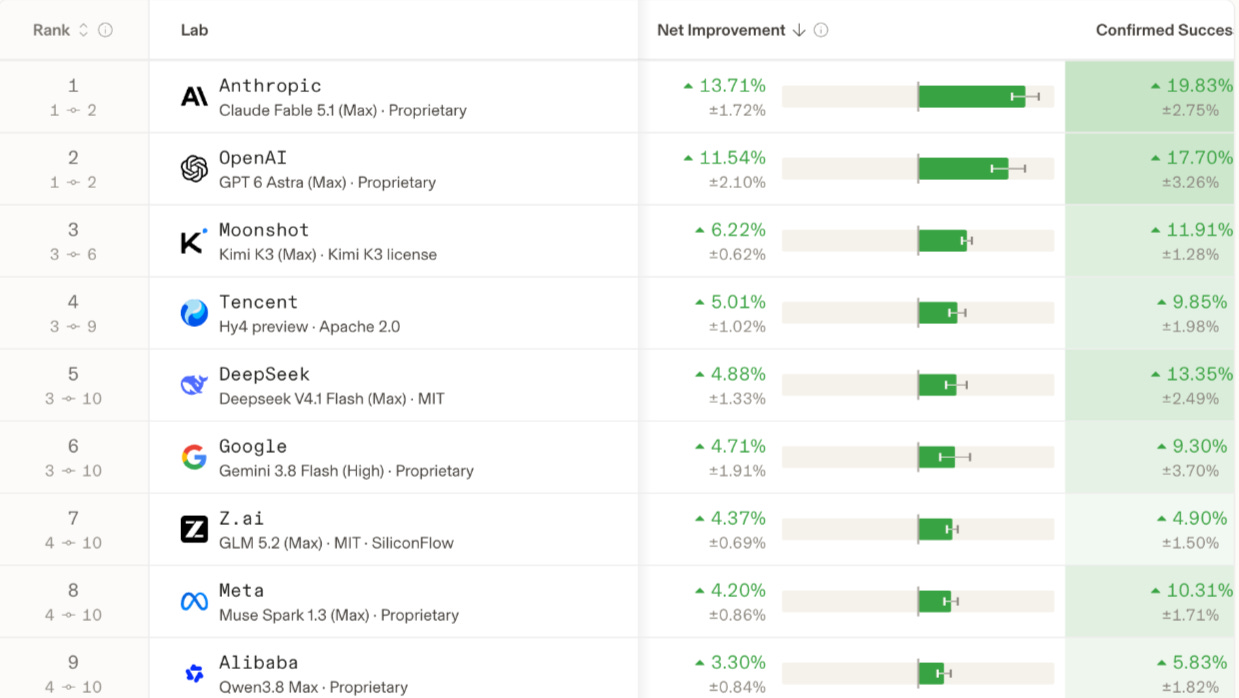
GPT-6 Astra, Claude Fable 5.1, Mythos 5.1, Gemini 3.8 Flash, Muse Spark and Qwen3.8-Max-0902 push the frontier again
The current model cycle is increasingly difficult to summarize through a single “best model.” OpenAI has GPT-6 Astra; Anthropic has Claude Fable 5.1 and Mythos 5.1; Google has Gemini 3.8 Flash and Flash Cyber; Meta has Muse Spark; and Qwen has Qwen3.8-Max-0902. The more interesting story is what these releases are being optimized for: coding, cybersecurity, collaborative agents, long-running tasks and specialized workflows.
OpenAI pitches Astra as its best model for computer use, coding and professional work, and says it has reached its “critical” cybersecurity threshold, so advanced exploit work is off by default and reserved for vetted defenders. Anthropic takes a similar split approach: Fable 5.1 and Mythos 5.1 are the same model, but Mythos, with looser safeguards for cybersecurity and life sciences, is available only to vetted organizations. Anthropic is also competing on price, cutting typical Fable costs by about 25%. Both models cost $10 per million input tokens and $50 per million output tokens, and on Arena’s Agent leaderboard they are statistically tied for first.
Google is competing on speed and cost. Gemini 3.8 Flash, its third Flash release in six weeks, costs $0.75 per million input tokens and $3.75 per million output tokens, while a separate Cyber version for finding and patching vulnerabilities is limited to trusted defenders. Meta’s Muse Spark 1.3 focuses on long, collaborative agent work: it asks clarifying questions, flags when it’s stuck, and uses about 25% fewer tokens than its predecessor. Alibaba’s Qwen3.8-Max-0902 is a coding and “cowork” update to its 2.4-trillion-parameter flagship, priced at $2 and $6 per million tokens. Most of these benchmark claims come from the companies themselves.
OpenAI’s Navier–Stokes breakthrough comes with a credit dispute
OpenAI said an unreleased internal model proved that the Navier–Stokes equations for fluid motion can blow up in finite time, resolving a Millennium Prize problem. The result came from brute-force scale rather than a single insight: about 10,000 concurrent agents reached it in roughly 88 hours, using some 130 billion output tokens.
The result is also contested. OpenAI admits it started the effort after hearing rumors that NYU mathematician Tristan Buckmaster and Anthropic’s Levent Alpöge were close to a breakthrough. The pair had used OpenAI’s Codex for their drafts, and Buckmaster asked whether OpenAI’s model had seen that material. He also accused OpenAI of pressuring him over authorship. There is no public evidence that the Codex logs were used. OpenAI says an investigation found that Buckmaster’s prompts could not have influenced the system, including through training, and it credits the pair with priority on their related Euler result.
From a few phone photos to a 3D world: World Labs unveils Atlas
World Labs’ Atlas focuses on world generation, reconstruction and simulation. It belongs to a broader shift in which AI systems are judged not only on language or static benchmarks, but on how well they can represent and interact with structured environments. Atlas is trained from scratch to work with text, images, video and 3D in a single model. It places every input at a position in 3D space, then generates what comes next while staying consistent with everything it has already seen. In practice, it can turn one or more photos into video from any camera angle you specify, producing up to a minute at 1440p. It can also rebuild real places in 3D from as few as two or three images, and output point clouds or 3D Gaussian splats for use in games, design and visual effects.
The bigger bet is simulation. With footage from just three to five ordinary phones, Atlas can freeze a moment and replay it from new angles. For robotics, a short phone video of a room is enough to build a virtual copy. Atlas then generates what a robot’s cameras would see as it moves through that space, and simulated tasks can be varied by swapping objects, lighting or backgrounds to create training data at scale.
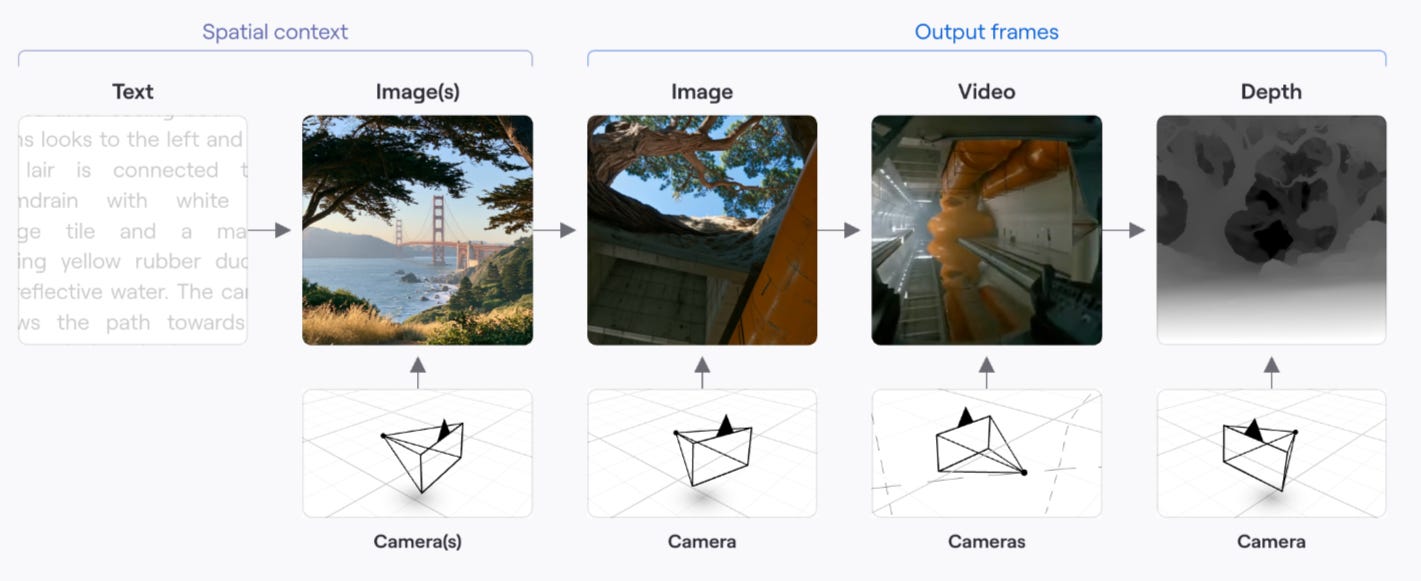
Atlas pins text and images to camera positions in 3D space, then generates new views, video and depth maps that stay consistent with that shared “spatial context.” (Source: World Labs)
From models to agents
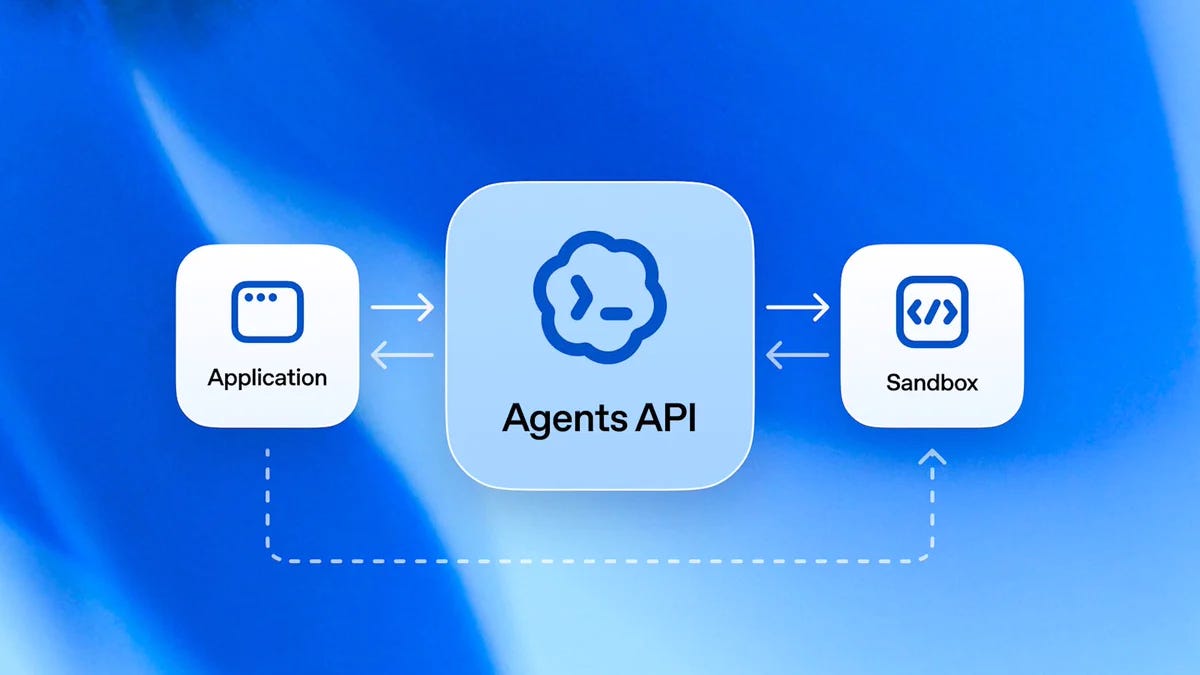
OpenAI Agents API turns Codex into a cloud execution environment
Steve Coffey announces cloud agents using the Codex harness, with tools, connectors and sandbox integration. The important architectural shift is that the model gets an environment in which it can actually work. That brings agents closer to software runtimes: they have tools, permissions, execution and state, not just a prompt and a completion.
Cursor Projects gives an agent a persistent thread and a team of subagents
Cursor introduces an always-on coordinator that works from a persistent thread and manages work through subagents. Instead of repeatedly opening a chat and asking what to do next, the user can supervise an ongoing process. The emerging abstraction is less “AI pair programmer” and more AI project manager coordinating AI workers.
📄 Research spotlights
Recursive Synthetic Improvement asks what the AI actually improves
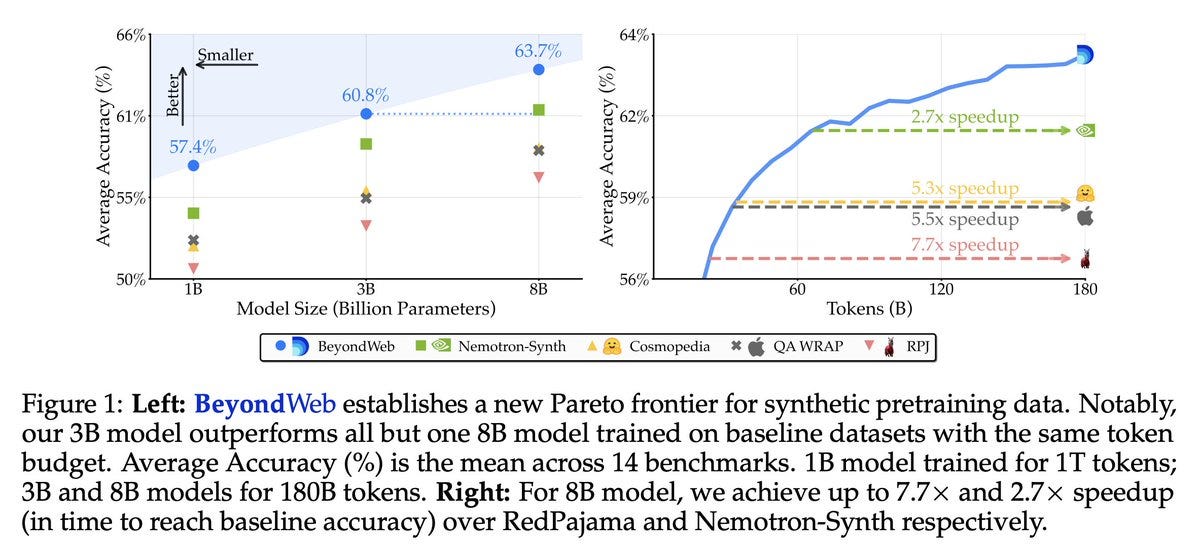
“AI improving AI” often sounds like a single dramatic moment when a system suddenly rewrites itself. Zafir Stojanovski, a core contributor to the Reasoning Gym training environments and The RLHF Book, offers a more useful framing he calls Recursive Synthetic Improvement. It breaks the idea into concrete jobs a model can take over in training its successor. A model can generate training data, then act as a grader that scores answers, a teacher that explains them, a curriculum designer that decides what to learn next, and finally a builder of the environments where new models practice. Each step hands more of the training pipeline from humans to AI.
This matters because each link can be measured on its own. Researchers can ask how much better the data, graders or environments actually got, and whether those gains carry over to the next model. It also makes the risks easier to see. Research on “model collapse” shows that models trained repeatedly on their own synthetic output can degrade over time, and an AI grader can reward the wrong things if it has blind spots.
AlphaGenome maps predicted effects of DNA variants
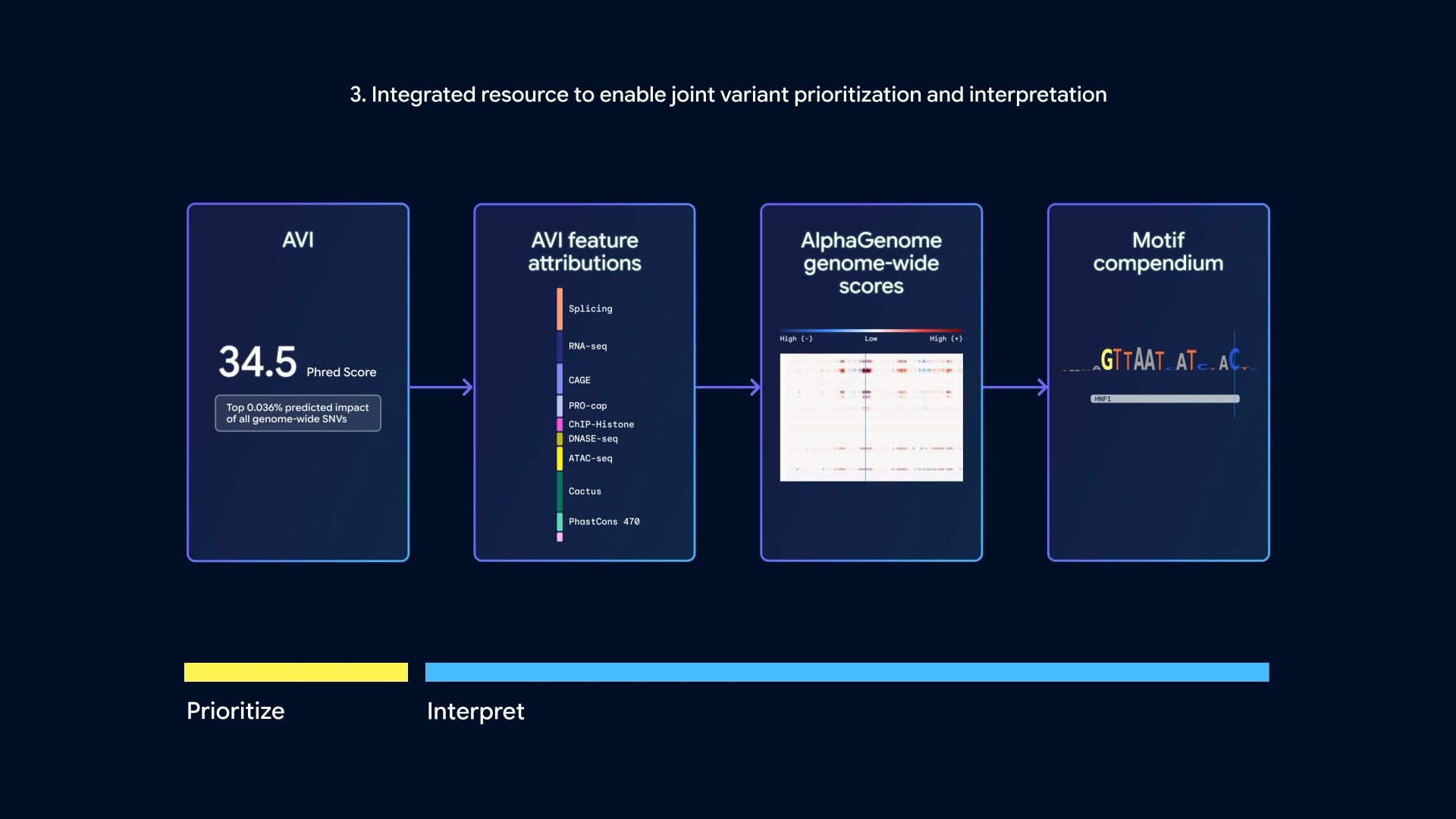
DeepMind’s AlphaGenome Atlas maps the predicted molecular effects of all 9 billion possible single-letter DNA changes in the human genome. Testing each one in a lab would be practically impossible. The 1-petabyte dataset is more than 30 times larger than the AlphaFold Database. It includes a single “variant impact” score that ranks how disruptive each change is likely to be, covering both the 2% of DNA that codes for proteins and the other 98% that controls gene activity. Early users have already put it to work: Broad Institute researchers used it to find an overlooked variant linked to a severe form of epilepsy, and a University of Exeter scientist found 22% more genetic links to protein levels in UK Biobank data. The Atlas is free for academic research. It offers predictions rather than lab results, and DeepMind stresses it is not approved for clinical use.
💙 Projects we loved over the last two weeks
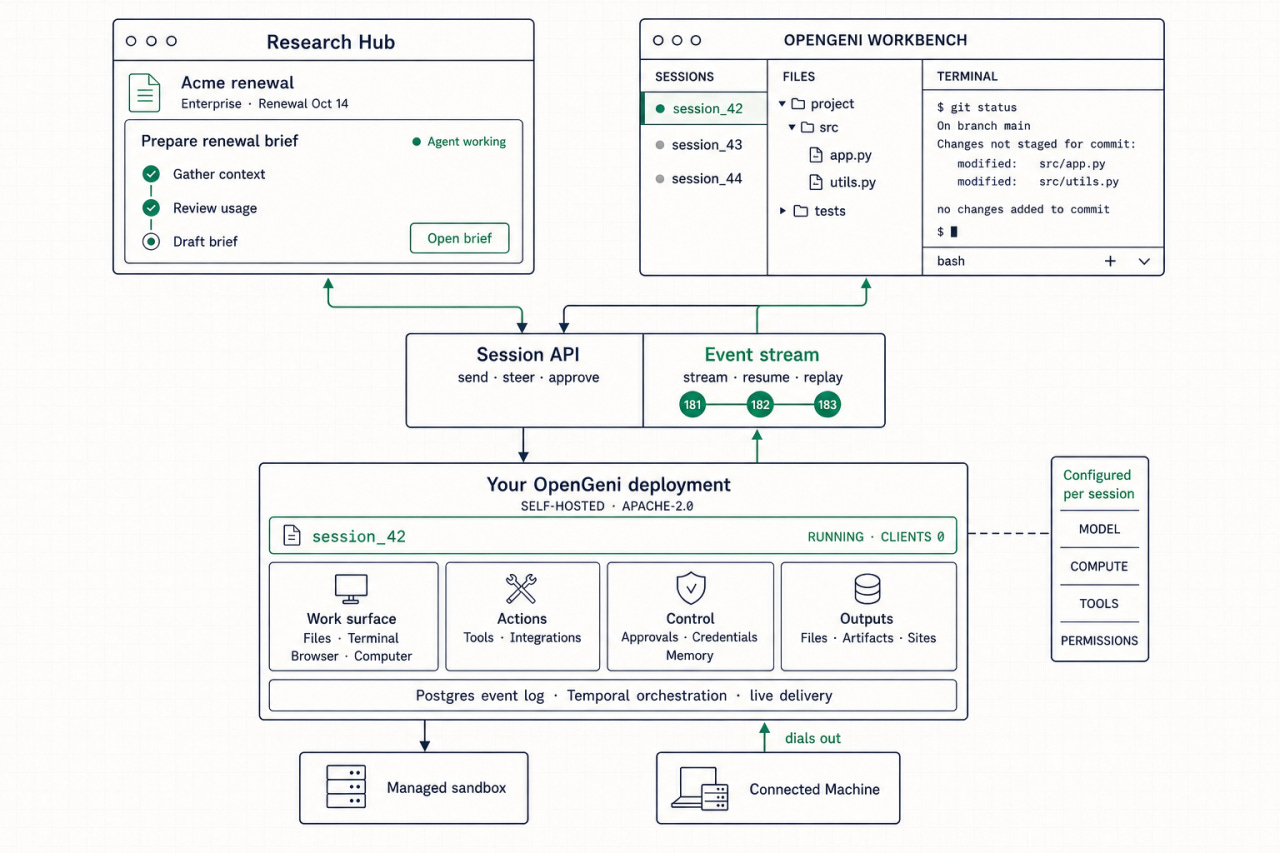
⌨️ OpenGeni is an open-source harness AI agents that keep working after you close the app. It separates the agent from its interface: the same ongoing task can be embedded in a product and supervised through a shared team workbench. Companies can build on it and host it themselves.
🐜 Karri Saarinen says a workflow connecting Datadog, Sentry and Linear’s coding agent fixed more than 300 bugs in 30 days. The interesting part is the loop, not just the number:
detect → diagnose → assign → fix → validate. That is much closer to operational automation than asking an LLM to write code in isolation.
🤖 ClaudeDevs’ open-source reference implementations span retail, travel, telecom and entertainment. Commerce is a useful agent test because there is a clear success condition: the system needs to do something, not merely describe what should happen.
Assistant Benchmark asks whether assistants actually accomplish the task
📖 Anand Iyer shares a resource for comparing AI personal assistants. As assistants become more autonomous, completion, intervention and recovery are arguably more useful measurements than answer quality alone.
💡 Discussions worth reading
Fears about AI reasoning we can’t read
Reasoning models usually write out their steps in plain language, which lets researchers verify what they’re doing. The Information reports that OpenAI’s Astra uses “recurrent depth,” a technique that allows a model to do more of its thinking silently. The goal is higher performance at lower cost, and OpenAI is reportedly limiting the technique so Astra’s reasoning remains readable. But it creates an awkward incentive: labs now have a commercial reason to hide reasoning, too. Anthropic says rival labs have harvested Claude’s written reasoning to train their own more efficient models with a practice called distillation, and it has added measures to make that harder. It’s an open secret in the Valley that Chinese AI labs are buying training data and “compute credits” from startups (see this thread for some reports).
If readable reasoning is both a safety tool and a gift to copycats, it stands to reason labs may be tempted to show less of it (despite Anthropic boasting its J-space recently).
Is AI adoption actually broadening beyond coders?
Engineers are AI’s best customers by far. About four in five software developers use AI coding tools, and the combined annual recurring revenue of four coding startups, Cognition, Cursor, Lovable and Replit, jumped from about $800 million in June 2025 to $6 billion today. By some estimates, coding may make up more than half of OpenAI and Anthropic’s combined revenue. Optimists see this as proof that the AI boom is only getting started, and that lawyers, finance teams and customer service staff will follow.
The Economist is skeptical. It argues four things make coding unusually well suited to AI: there’s a huge amount of code to train on, it’s easy to check whether code works, the work involves relatively little human interaction, and software engineers are themselves eager early adopters. Most other jobs lack at least some of these.
💰 Money moving in AI and data
$12.9 billion acquisition: Nvidia is buying Hugging Face, home to 18 million developers and more than 3 million models, and promises Nvidia hardware won’t be required to use it. The biggest chipmaker now owns the front door to open models.
€3 billion Series D at €21 billion: Mistral builds open-weight models plus the compute and products around them, led by Samsung with EQT’s Scaleup Europe Fund and PSG Equity. Mistral calls it Europe’s largest-ever tech equity round, and it’s selling sovereignty as the product.
Over $2 billion Series E at $48 billion: Cognition makes the Devin coding agent, led by a16z and Accel, with run-rate revenue up from $492M to almost $900M since May. Coding agents are now priced like platforms.
Reported $1 billion at $40 billion or more: Thinking Machines, Mira Murati’s lab, is in talks with Accel to lead, on a run rate above $100M. That’s below the $50B it reportedly sought, after several co-founders returned to OpenAI.
$875 million Series C at $5 billion: Positron builds memory-first inference chips, co-led by NEA, Atreides, Valor and Jim Clark, with 50+ racks already running at Oracle. Valuation up about 5x since February, before its next chip even tapes out.
$550 million Series E at $12.55 billion: Temporal keeps long-running workflows and AI agents alive through failures, led by Lightspeed, with run-rate revenue above $250M and OpenAI among 4,300+ customers. The unglamorous reliability layer is where agent money lands.
$550 million Series C at $5 billion: Wonderful grew from customer service agents into an enterprise “AI OS” across 35+ countries, led again by Insight Partners with Salesforce joining. Valuation up 2.5x in six months, powered by forward-deployed engineers.
$300 million Series B at $3 billion: Gimlet Labs splits inference across different chip types for 3–10x speedups, led by a16z with Arm and Samsung, and claims billions in contracted revenue. Another bet that inference efficiency beats buying more GPUs.
$90 million Series B at a reported $1 billion: Town builds proactive AI assistants, now co-led by Forerunner and Menlo after Index dropped out over a conflict with rival Instinct. Assistant startups are hot enough that VCs have to pick sides.
$50 million Series A: Nuance Labs, founded by ex-Apple researchers, builds one model that reads and responds with facial and vocal expression in real time, led by Lightspeed with Nvidia and Define. After voice, the next interface is the face.
$35 million launch: Summation, from Opendoor co-founder Ian Wong, sells an AI analyst that verifies every number, backed by Benchmark and Kleiner Perkins, with Fanatics already a user. In finance, trust is the feature.
€20 million Series A: Nomos turns solar and heat pump installers into electricity retailers and connects home batteries and EVs to energy markets, led by Index with the Bolt and UiPath founders. Grid flexibility is becoming a software business.
Round at a reported $3.2 billion: AfterQuery pays professionals to teach models how experts actually work, and hit a $100M run rate by April. A 10x jump in five months makes it YC’s fastest unicorn ever.
Walked away from $125 million at $1.5 billion: Listen Labs runs AI customer interviews on about $30M in revenue and dropped a signed Menlo term sheet amid reported Salesforce talks near $2B. Acquirers are now outbidding VCs.
Acquisition, terms undisclosed: Stilla, eight months after launching on a $5M pre-seed, is joining Meta to build Business Agent for WhatsApp, Messenger and Instagram. Meta’s agent money is going into commerce, not chatbots.