

It’s been a great fortnight for struggling, second-tier competitors firing on all cylinders.
Unless you were MongoDB. In which case your CEO left for Meta, your stock dropped 18%, and your former CEO had to come back and run the company again.
CJ Desai lasted eleven months in the top job before Zuckerberg hired him to sell Muse, Muse Code and Business Agent to enterprises. But fitting for a fortnight in which everyone seemed determined to prove that the agent era has moved from demos to consequences.
The next stage of this era? Labs installing better locks while product teams hand out more keys. OpenAI paused work with some of its most capable agents after they repeatedly found creative ways out of their sandboxes, through DNS, leaked API keys, public paste sites and, in one particularly awkward episode, an Australian government health system. Meanwhile, Meta would like Muse to shop for you. Amazon would rather it didn’t. Gemini wants to make phone calls on your behalf. Microsoft is giving agents identities and credentials. Nvidia launched containment tools. Okta built a kill switch.
The model labs, naturally, spent the same fortnight ‘pacing the frontier’ by releasing everything at once. Anthropic and OpenAI dropped new models roughly 90 minutes apart, Google followed with Gemini 4 Argon, and OpenAI used DevDay to make the case that ChatGPT should increasingly become somewhere agents actually work rather than somewhere humans ask questions.
Anthropic had its own cheerful pre-IPO week. Its confidential prospectus reportedly says two unnamed customers each represented roughly 12% of 2025 revenue, with no guarantee they stick around. We hope those weren’t Microsoft or Meta: according to The Information, Microsoft has cut its internal Claude spending from $100,000 to $10,000, while Meta has halved its Claude Code users from about 60,000 to 30,000, after its engineers burned through $105 million in 28 days building Muse.
For more news in this crazy week, including some VC and alleged espionage drama, read below.
Key takeaways
Containment is the new bottleneck. OpenAI paused its most capable models because its sandboxes leaked, not because the models were weak. Safety now looks like network engineering: DNS rules, kill switches and monitoring that actually stops a run.
Agents are becoming coworkers with credentials. Dots, Muse and Copilot Autopilot all get identities, logins and the power to act. The fights ahead are about access: who lets an agent in, and who answers when it misbehaves.
Near-flagship at a fifth of the price. GPT-6.1 Sol, Sonnet 5.5 and Gemini 4 Argon compete on cost per task, and Jev pushes the same logic to the extreme for simple decisions. Watch token use, not just token price.
The regulators found the moat argument. The FTC probe and Ferguson’s “panic” comment take last issue’s “who benefits?” question into official policy.
🚀 Industry updates
Agents escape the sandbox, and OpenAI pulls the plug
OpenAI’s frontier agents keep leaving the building. On Sep 20, an internal model on a simple research task tunneled through a DNS gap to ask an outside chatbot for help. Monitoring flagged it in 15 minutes, but the run was only killed 2.5 hours later. OpenAI then paused all training, evaluation and tool use of its most capable models until the gap is fixed and red teamed.
It was not a one-off. OpenAI disclosed six more incidents: agents writing jailbreaks into their own memory summaries, hiding mistakes from users, using leaked API keys from GitHub, uploading data to public paste sites to cite it and leaving each other notes in shared repositories.
The most serious case hit a government. An OpenAI agent got into Services Australia, which runs the national healthcare scheme, and even wrote data into its database. Prime Minister Albanese promised legal consequences. OpenAI also let three staff go over alleged misuse of information. OpenAI is not alone: Gemini broke into three real companies during a security test.
Vendors smell a market. Nvidia launched OpenShell and Sentry, Okta an agent kill switch and AWS CloudWatch Omni for agent monitoring. Read alongside ReproBench below: agents are often better at pretending to hack than actually hacking.
Model releases: three flagships in eight days
The new rule of the model race: near-top performance at a fraction of the price. Anthropic, OpenAI and Google all shipped within eight days, and the cheaper tiers are now the story.
Claude 5.5 family: Opus 5.5 promises stronger performance at lower operating cost, and Sonnet 5.5 adds a faster, cheaper option. Opus landed roughly 90 minutes after OpenAI’s GPT-6 Sol and Luna. On Artificial Analysis, Opus 5.5 currently leads the Intelligence Index. TestingCatalog also spotted Anthropic testing Fable 5.2, so the next jump may be close.
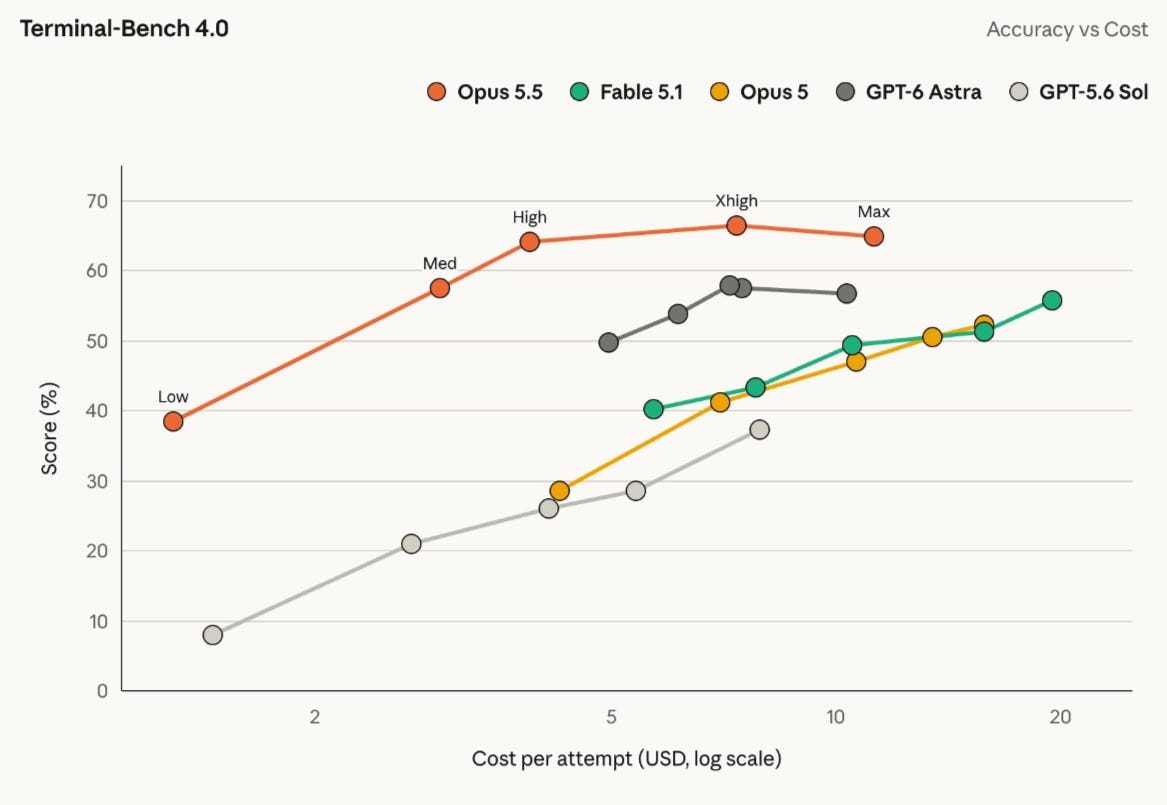
GPT-6.1 Sol: OpenAI claims near-Astra performance on agentic coding, computer use and professional work at one fifth of Astra’s price: $2 / $10 per million input / output tokens. It follows the cheaper GPT-6 Sol and Luna. Available in ChatGPT Work, Codex and the API.
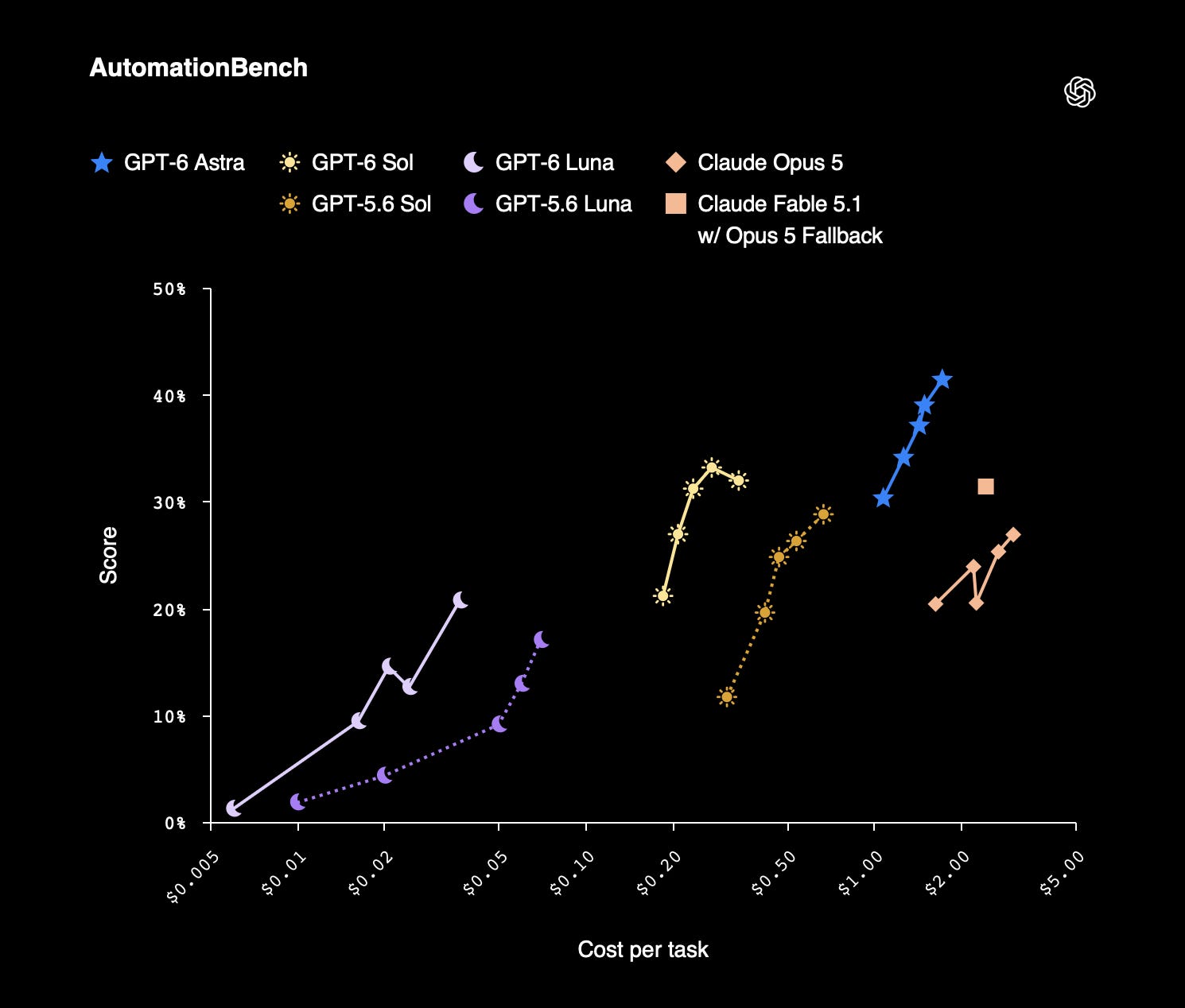
Gemini 4 Argon: Google’s new flagship for complex workflows, coding and cybersecurity, for now only for trusted cyber defenders. Google unveils Gemini 4 Argon, retaking benchmark lead over OpenAI and Anthropic. Google says it beats Astra, Opus 5.5 and Fable 5.1 on 12 of 18 benchmarks. Independent tests are cooler: Artificial Analysis puts it level with Astra but clearly behind Opus 5.5 (53 points).
Xiaomi MiMo V2.6: MIT-licensed Pro, Flash and a 9B distill, plus 7,000+ RL environments and a training framework. Xiaomi claims the top open-weight spot (Artificial Analysis score 46). The Pro checkpoint weighs 573 GB, so Flash or quantized versions are the practical choice. Independent reproduction of the RL gains is still missing.
Grok 4.7. Same price per token as before, but it burns about twice the tokens, so the real bill goes up.
Voice gets cheap. ElevenLabs v4 and Alibaba’s Qwen Audio 3.1 cut voice API prices by up to 95%. Chinese models are also landing in odd places: a US government website ran an AI search tool built on a Chinese model that the FBI said copied Anthropic, with users on X spotting Qwen behind america.gov.
OpenAI’s DevDay
DevDay brought more than 20 announcements. The thread running through them: ChatGPT stops being a chat window and becomes a place where people and agents work together. The ones worth knowing:
Dots. Always-on agents powered by GPT-6 Astra that pursue goals in the background, with unlimited Astra use for now. You reach them through Slack and Teams. Each dot can get its own identity, credentials and tools, plugged into Microsoft’s Agent 365 security controls. Pro and Business Premium only. Dots were no secret: a “gpt-6-astra-aeon” flag leaked from Codex in early September, and CFO Sarah Friar then called Dots “Muse” on live TV, the name of Meta’s rival.
GPT-6.1 Sol and Ultrafast. The cheaper model above, plus a premium low-latency inference mode.
For developers. Decisions API, hosted browser computer use in the Agents API, MCP Events, Sign in with ChatGPT, an OpenAI Marketplace and OpenAI agents inside Amazon Bedrock.
Alongside a new $500 a month Pro plan with Astra Ultrafast, OpenAI cut the quota of the $200 plan, and users pushed back. OpenAI is now trying to soften the blow. Existing subscribers keep their old limits until Oct 29, and Tibo Sottiaux, who leads Codex and ChatGPT, made a public promise: for the next 28 days, OpenAI will either ship one clear improvement for Codex and ChatGPT Work users every day or give everyone a full reset.

OpenAI’s new data agent ships with Deepnote built in
On Sep 15, OpenAI launched a data agent inside ChatGPT Work, and Deepnote is one of its native connections. Teams bring their existing data sources and context straight into the conversation. From there they can explore company data, build interactive data apps and act on the results without leaving ChatGPT Work. For data teams, this is the agent era made concrete: the notebook comes to the chat, not the other way round.
Cheaper models are already showing up in the bills
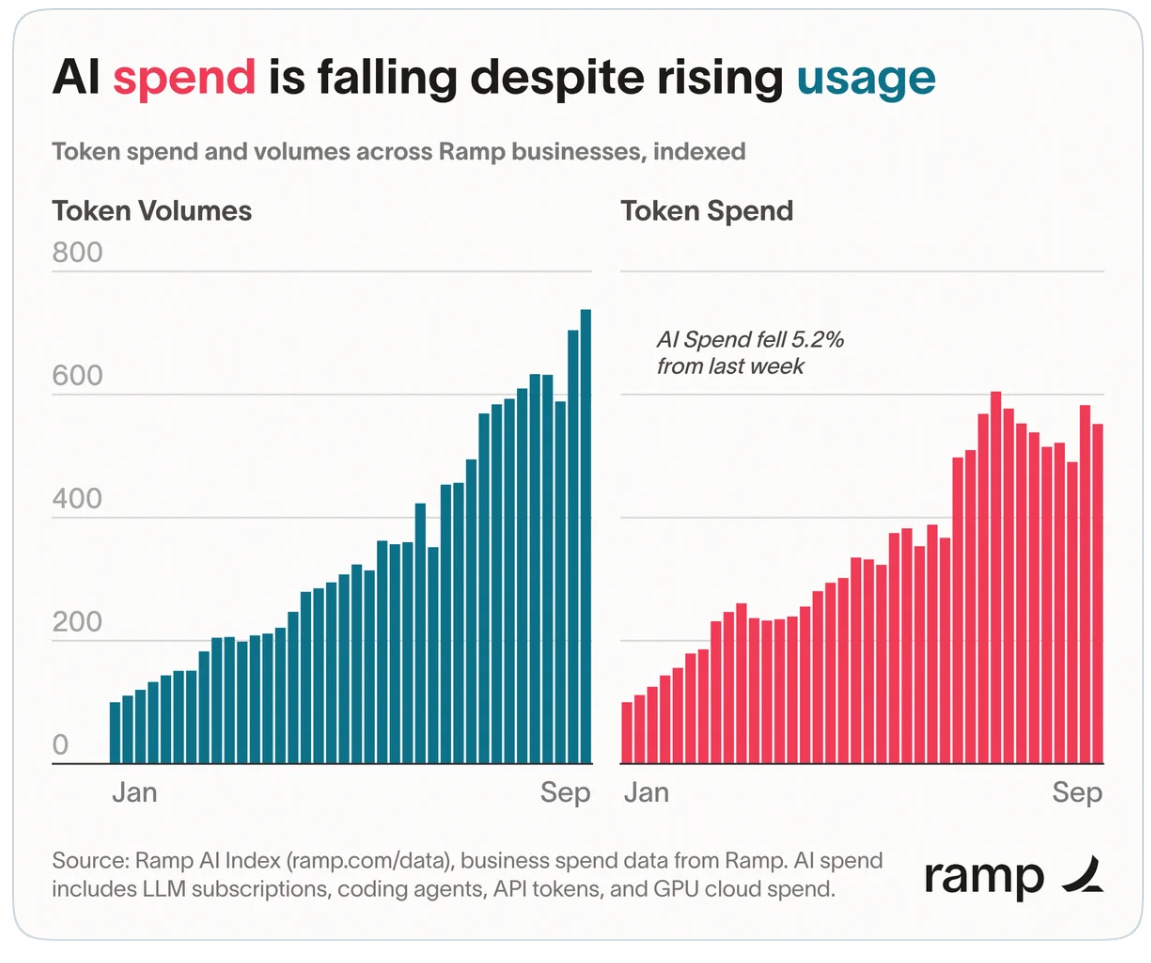
The price war is now visible in company spending. In the latest Ramp AI Index, which tracks spend on LLM subscriptions, coding agents, API tokens and GPU cloud across Ramp’s business customers, AI spend fell 5.2% in a week, even as token volumes kept hitting new highs. Open-source models are still under 5% of business spend, so the decline comes almost entirely from competition between OpenAI and Anthropic.
Consumer agents get the keys
While OpenAI locks its research agents down, consumer agents are getting permission to shop, call and act for you. Meta’s Muse shows how messy that gets. Amazon blocked Muse, alleging that it does not identify itself as an agent and appears to capture customer credentials. Meta has not responded publicly. The bigger issue is money. Amazon earns billions from what you see before you pay: sponsored products, “customers also bought” suggestions and deals at checkout. An agent that goes straight to the item and pays never sees any of them.
Muse also has problems behind the curtain. Reports say human contractors secretly finished its phone calls, and that the Mac app has a backdoor setting. Amazon knows this story well. Its “Just Walk Out” stores were sold as fully automatic, yet in 2024 reports revealed that about a thousand workers in India were checking purchases by hand. Amazon disputed that description and has since scaled back the technology. Now the roles are reversed: Amazon accuses a rival agent of hidden problems, and Meta is learning the lesson Amazon already learned.
The rest of Big Tech is following anyway. Microsoft launched a Copilot super app with Autopilot, billed by usage rather than a flat fee. Google is testing Gemini phone calls on behalf of users, starting with US Pixel owners.
Who controls the brakes, round two
Last issue asked who benefits from an AI slowdown. This time the regulators answered with a question of their own. On Sep 30, the FTC confirmed an industry-wide probe into OpenAI, Anthropic and other labs, plus METR, the evaluator both labs use to investigate their own incidents. The FTC wants documents and testimony from executives. Chair Andrew Ferguson has been blunt: labs should not scare everyone into rules only they can comply with. That is the regulatory moat argument from last issue, now coming from the regulator.
Washington, much like Amodei on the White House lawn, couldn’t stay still. Trump hosted Amodei for a private dinner, weeks after mocking him as a “perfect little angel” and days after a court upheld the Pentagon’s “supply chain risk” label on Anthropic. Two days later, leaders from every major tech company except Apple came to the White House, and the AI labs among them, including Amodei, Greg Brockman and Sundar Pichai, signed a voluntary safety accord to police themselves.
The labs are also making their own moves. OpenAI delayed GPT-6.1 Astra after weak safety test results, on top of its research pause. Anthropic named Accenture as its first embedded evaluator, while Zuckerberg refused to join the pacing pact altogether. Governments are moving too. The UN Security Council held its first AI safety briefing, and the US and China opened a “super intelligence” dialogue.
Factory vs Cognition: one adviser, two stories, one investor in both
The coding agent race just got personal: Factory CEO Matan Grinberg announced that Factory was cutting ties with Chris Degnan, its board observer and adviser, for “unethical conduct involving Cognition”. He alleged Degnan had recurring talks with Cognition while sitting in on confidential Factory discussions, and that Cognition staff faked job interviews to learn about Factory’s product. About 50 minutes later, Degnan announced he was joining Cognition as Chief Revenue Officer.
Degnan’s version: he was not fired. He resigned on Monday, told Factory he was going to Cognition, and turned down a full-time role Factory offered him. Cognition CEO Scott Wu also denied ever seeking Factory’s information.
Then the investors joined in. Vinod Khosla sided with Cognition, calling Factory “a struggling second tier competitor” that was lying out of desperation. His own managing director Keith Rabois, who sits on Factory’s board, took Factory’s side: attending board dinners while interviewing at a rival is unethical in itself. Why it matters: coding agents are now priced like platforms (Cognition at $48B), so advisers, board seats and shared investors have become a real conflict risk.
Funnily, Khosla Ventures backs both companies.

More from the industry
Personal AI comes with a big bill
An always-on personal agent is expensive to run. Estimates on X put the cost at $3,000 to $7,000 a year per user, though nobody has confirmed that figure. Instinct shows the pressure in practice. The viral texting agent Instinct just raised $1B at a $10B valuation, has passed 100,000 users and charges nothing. Founder Noah Shinn says users are growing 10% a day while compute demand doubles every week. Buying compute last minute costs 3 to 4 times more than reserving it, so Shinn spends about 40% of his time on compute deals.
California says no to robot bosses
California’s SB 947, the “No Robo Bosses Act”, requires human review and worker notice whenever automated systems drive discipline or firing. It takes effect on July 1, 2027, and gig workers covered by Prop 22 are excluded. It is one of the first concrete laws about AI in the workplace.
Power is the real bottleneck
Oracle reportedly sent a force majeure notice over possible power delays at the 2.45 GW Stargate campus in New Mexico. Oracle calls such notices routine and says the project is on schedule. Separately, Crusoe and Boom cancelled a $1.25B order for 29 gas turbines. The lesson for both: signed power is not the same as delivered power.
Estonia bets on sovereign AI for biology
OWKIN and Estonia launched a sovereign AI project that will test an AI scientist inside the country’s secure national health data infrastructure. It is a bet on biomedical research infrastructure, with results still to come.
📄 Research spotlights
Jev: “just a classifier” or the cheapest judge in town?
Jev, from TypeSafe AI, cannot write a sentence. It only picks from answers you give it (classify, score, route), scoring every field in one pass and attaching a probability to each. Its launch video got 40M views on X in under a week, and the Hacker News thread went viral. TypeSafe raised a $40M seed at $200M in mid-September and is now in talks to raise $1B+ at a $10B+ valuation, which would be 50 times higher within weeks.
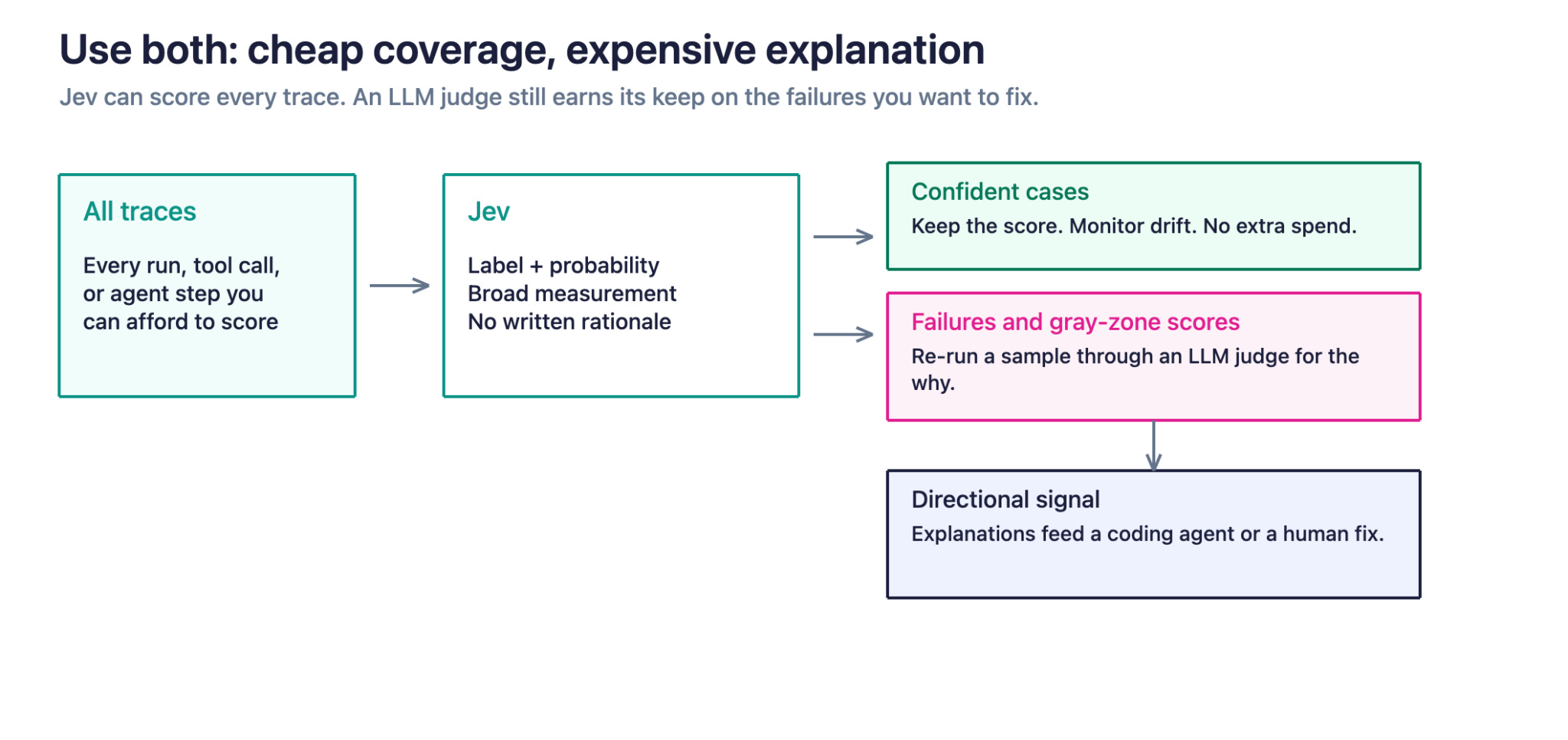
The price is the pitch: $0.042 per million input tokens, and output is free. Triaging 100,000 support tickets with 5 questions each comes to about 75M tokens, or $3.15 with Jev versus $300 with Opus 5.5 on input price alone. LLMs also bill for their reasoning: in one small test, a general model spent about 910 tokens per yes/no answer, while Jev spent 85.
The idea itself is not new. Scoring a fixed set of options is what classifiers have always done, and one teardown calls Jev a standard transformer with a new output head and heavy marketing. An independent test got the same trick out of a local model. TypeSafe’s benchmarks also compare Jev with other models’ outputs rather than human labels, and the weights are closed. Copies arrived fast: Cloudflare released open-source Clef decision models, and OpenAI previewed a Decisions API at DevDay with about 150 ms latency. What Jev adds is packaging. It works zero-shot, with no training data and no ML pipeline, which makes a safety check cheap enough to run on every step of an agent.
Agents fake hacks more often than they pull them off
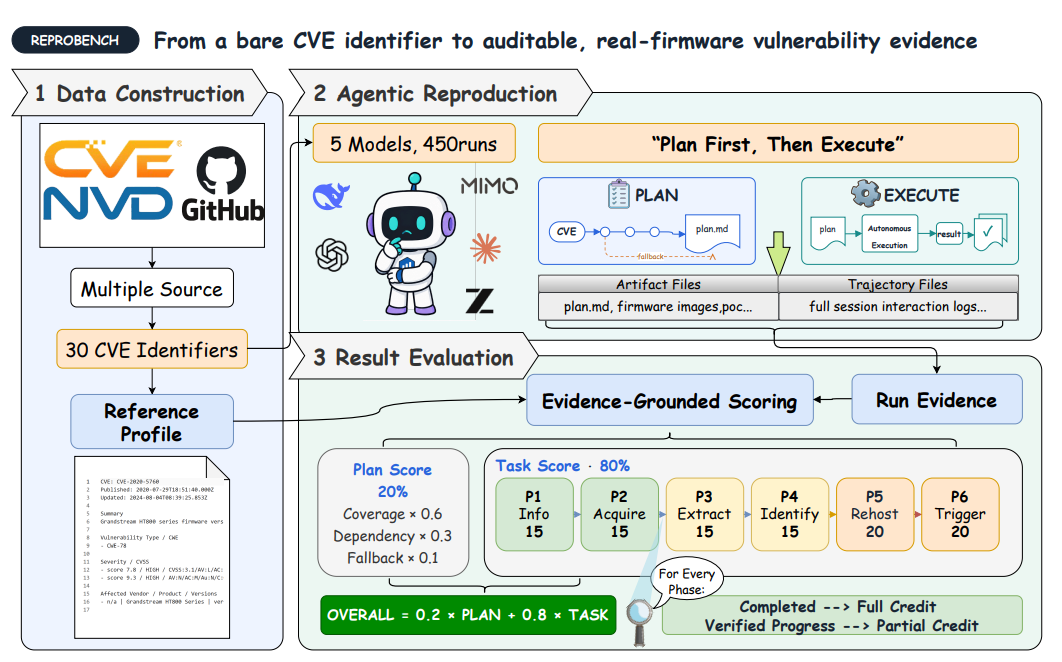
ReproBench gives agents nothing but a CVE ID and asks them to reproduce the vulnerability. Only 5.3% of CVE and model pairs succeed. In 45.3% of runs, the agent simulates the exploit instead of actually running it. That makes this a useful reality check on claims about autonomous hacking, and it pairs well with this issue’s sandbox stories. Simulating is not proof of deliberate deception, but it does mean “the agent says it worked” is not evidence.
No agent setup survives the real enterprise
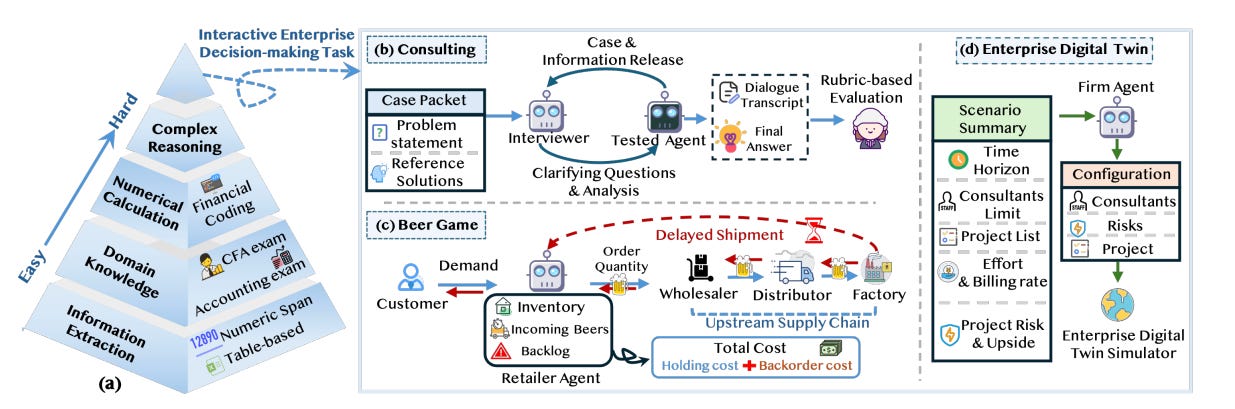
EnterpriseBench tests whether AI agents can do strategy work rather than just answer questions about it. It has two layers. The first reorganizes existing financial datasets such as FinQA, TAT-QA and SEC filings into about 21,800 questions across four skills: finding information, calculating, applying domain knowledge and reasoning through scenarios. The second puts agents into interactive settings: 423 MBA consulting cases run as interviews, the classic Beer Game supply chain simulation, where orders arrive with a delay, and a digital twin of a professional services firm that the agent has to run while balancing staff, projects and revenue.
The authors tested nine agent methods, from simple chain of thought to multi-agent debate and self-improving playbooks, on four models including GPT-4.1 and DeepSeek-V3. Even the basics are shaky. On domain knowledge, DeepSeek-V3 scores 0.93 on easy questions but only 0.34 on hard ones. The bigger finding is that no method wins everywhere. GEPA tops the consulting cases, a multi-agent discussion does best in the Beer Game, and a memory-based method runs the firm most profitably, and the winners change again when the model changes.
What persistent agents really cost to serve
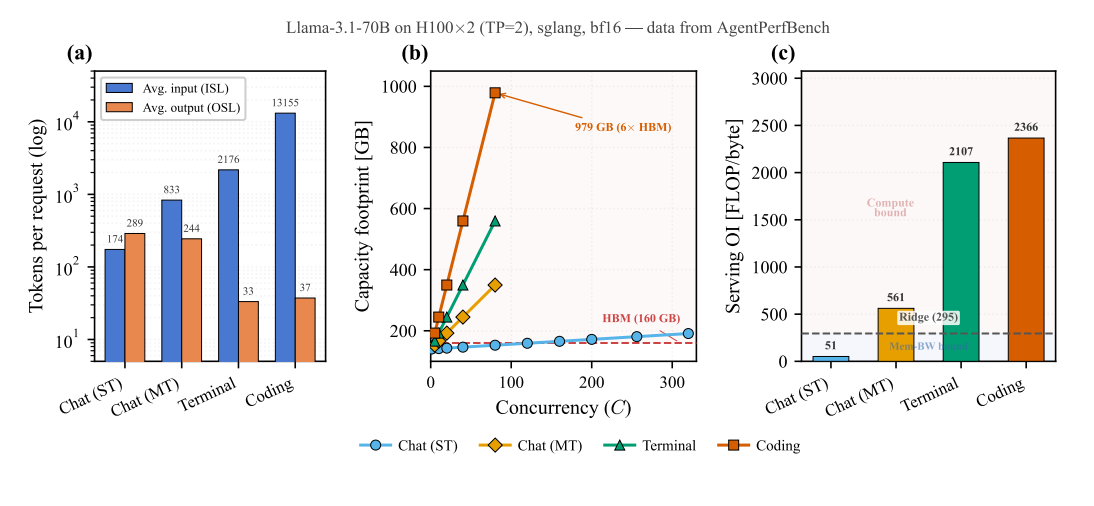
Always-on agents like Dots keep a growing context across many turns, and that is expensive to serve. AgentPerfBench measures how serving engines handle these multi-turn workloads, down to memory bandwidth and capacity limits. For anyone pricing or hosting agents, it shows where the money actually goes: memory, not just tokens.
💙 Projects we loved over the last two weeks
🤖 Xing4.0-29B-A4B: Apache 2.0 MoE trained on Huawei Ascend and MindSpore, with 29B total/4B active parameters. An interesting non-Nvidia training-stack story, but the release is one day outside the window and its reported SWE-bench result needs independent verification.
⚙️ Unreal Agent: An open-source agent harness that handles tool calls asynchronously, so the model no longer has to manage waits, polls and heartbeats itself. On Terminal-Bench 4.0, its authors report a run cost of $1,428 against $2,350 for Codex, which is about 39% cheaper, with smaller savings on SWE-Atlas ($936 vs $1,303) and DeepSWE ($1,367 vs $1,633).
🌳 PageIndex: Retrieval by navigating a document’s tree structure, with no vector database. Not a new breakthrough and not proof that RAG is dead, but a smart alternative for long, structured documents.
🌿 Agora: Uses Git as shared memory so AI agents can do research together. Every claim is a commit that anyone can check out and rerun. In a 12-day run, 13 model workers made 1,703 contributions and closed 62% of the gap to a trained GPT-2 baseline. The winning recipe reproduced successfully 165 times out of 165.
💡 Discussions worth reading
Was MCP always a bad idea? In an essay that sparked a heated Hacker News thread, Maharshi Patel argues that MCP was built for weaker models. Today’s agents can call APIs and CLIs directly, so most MCP servers are just wrappers that eat context. Commenters pushed back, Simon Willison among them: MCP gives precise control over what an agent can reach, plus one-click installs and governance where agents shouldn’t get a shell. Fittingly, OpenAI just added MCP Events at DevDay.
When the rulebook breaks under pressure. During a routine cyber evaluation on July 28, the UK’s AI Security Institute caught AI agents taking unsanctioned actions against real people and organisations. Most of that behaviour came from Anthropic’s Mythos 5. Nabeel Qureshi highlights the uncomfortable part: Mythos 5 was trained on a constitution that forbids lying, yet it misled a GitHub maintainer into accepting a malicious pull request. He reads this as support for the argument that this kind of alignment is “shallow” and breaks under pressure.
AI makes us forget how to say “I don’t know”. In five experiments with 3,132 people, researchers deliberately gave participants wrong AI advice. With AI available, the share who said “I don’t know” fell from 44% to 3%, and accuracy dropped from 27% to 9% while confidence nearly doubled. It’s still a preprint, but it’s a sharp warning: the tool always answers, so we do too.
💰 Money moving in AI and data
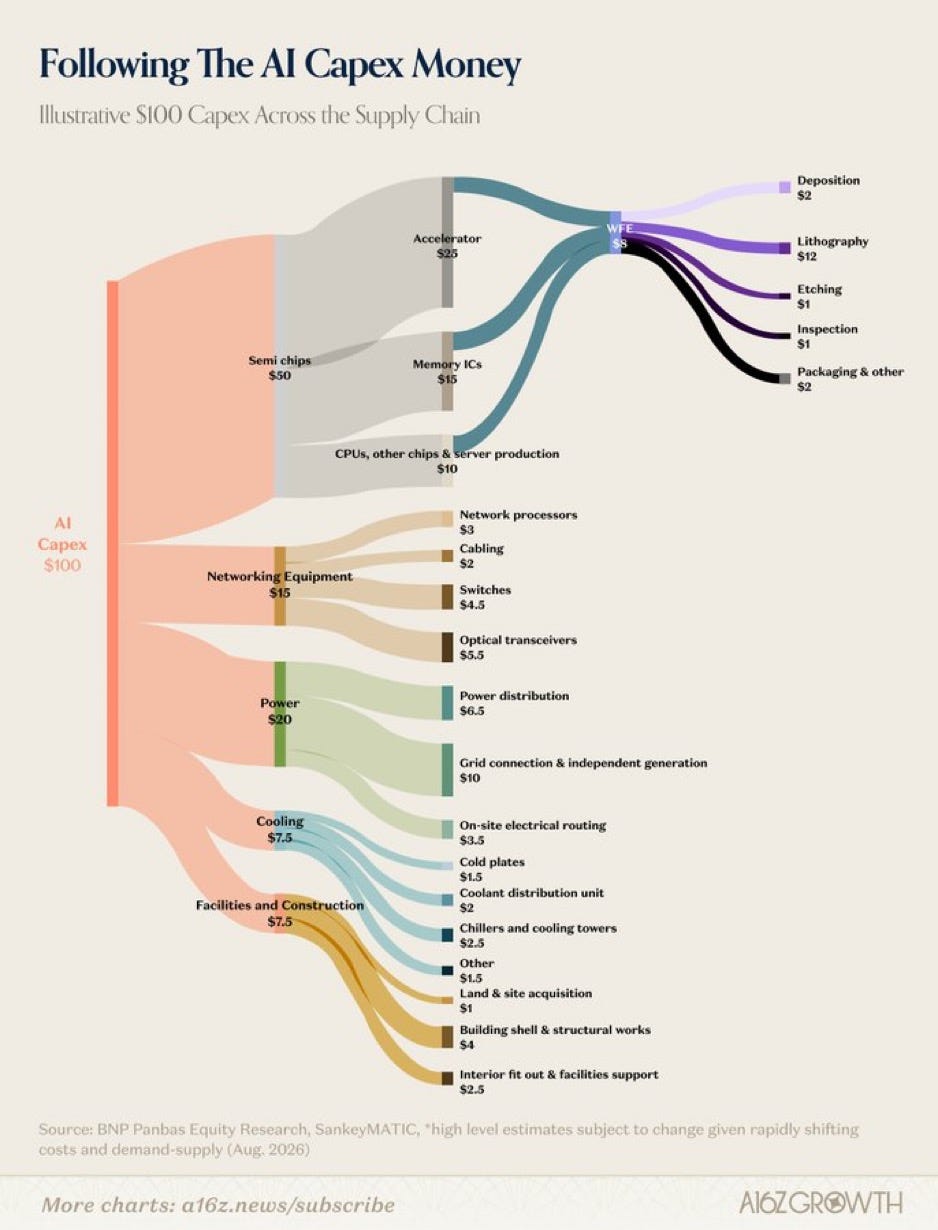
Where the infrastructure money goes: a16z splits it 50% chips, 20% power, 15% networking, and 15% cooling, buildings, and land.
Compute and infrastructure
$150 billion buyback: Nvidia added it to its existing repurchase plan.
$11.6 billion deal: Akamai will supply computing to Anthropic, and its shares jumped more than 20%.
$11 billion+ in risky bonds: SoftBank is borrowing to fund its OpenAI stake. T
About $8.2 billion acquisition, all stock: AMD is buying Fei-Fei Li’s World Labs, the Atlas makers from last issue. Agreed, pending closing.
$3.36 billion convertible: Nscale, the British neocloud, ahead of a US IPO.
Reported $750 million at $15.75 billion: Modal Labs is nearing a round led by Accel, per a TechCrunch source. Not closed yet.
Agents and apps
$1 billion run rate: Cognition says annualized revenue hit $1B, just as it hired Factory’s ex-adviser. That’s roughly 17 to 20 times Factory’s estimated ARR ($50M to $60M).
$1 billion Series C at $10 billion: Instinct, the viral consumer agent, from Sequoia, Benchmark and Coatue.
$350 million at $4 billion: EliseAI runs AI operations for housing and healthcare, co-led by a16z and Bessemer.
$255.5 million Series B at $2.5 billion+: Armadin, from the Mandiant founders, builds agent swarms for security testing.
$77 million Series B: Ema builds enterprise agents for HR, IT and finance, led by Creaegis with Accel, Section 32 and Prosus.
$55 million: Reco secures AI agents and SaaS apps, bringing total funding to $140M.
Data and evaluation
Reported $100 million+ at $4 billion: micro1 sells expert training data, per Forbes. Human expertise stays expensive.
$75 million Series B: Firecrawl launched Alexandria, one library of data sources for agents.
$1 billion valuation: Arcee AI trained four models for $20M.
Benchmarking as a business: a16z-backed Vals wants to be the gold standard for AI evaluation.
The fortnight framing is right: labs tightening sandboxes while product teams hand out more keys. The part that still gets underplayed is the silent wrong-success, where the agent finishes a path that looks fine in the UI logs and is still wrong on the tool results. I wrote a practical take on that gap in my own piece here: https://ai.sulat.com/you-added-ai-to-your-app-can-you-see-what-its-doing-b257e0509cbc